Advantages and Precautions for Each Type of Valve
1. Gate Valves
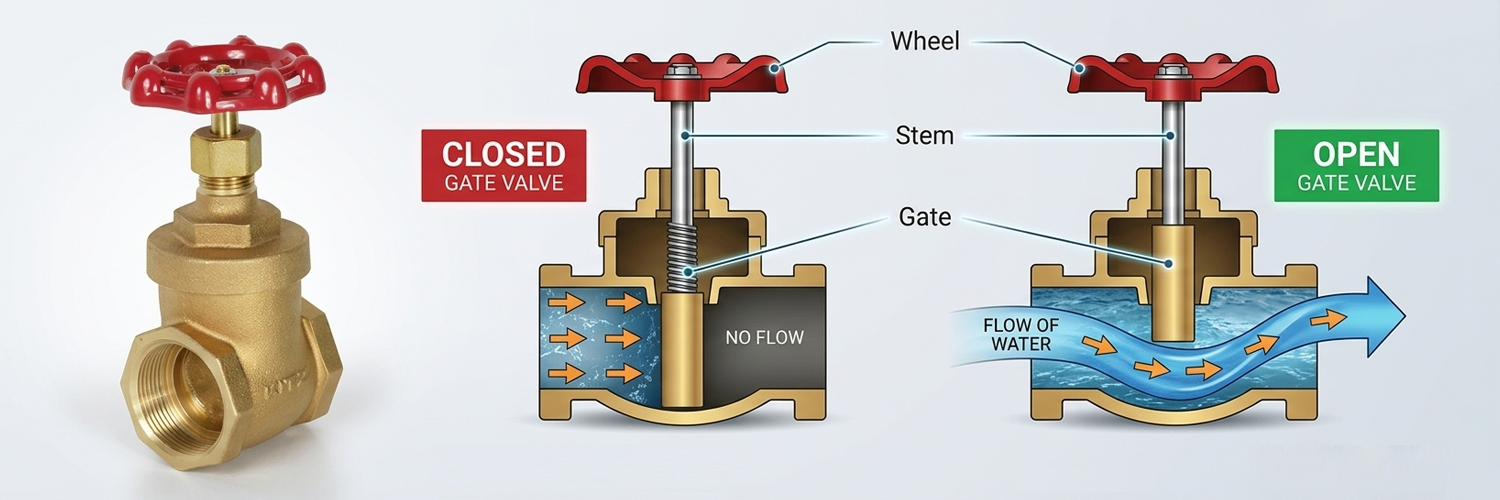
It is a type of valve that is suitable for use to control the opening and closing
by opening to allow fluid to flow through and closing to stop fluid from flowing through.
Advantages of Gate Valves
- Easy to install.
- Low pressure drop across the valve.
- Highly effective at shutting off flow; suitable for use with viscous fluids.
- Bi-directional flow capability (e.g., left-to-right or right-to-left); suitable for piping systems where the direction of fluid flow may change.
- Opening and closing takes a long time.
- Friction occurs between the gate and the valve seat surface during operation, which can cause scratches on the seat surface and impair the valve's sealing performance.
- Not suitable for fluids containing suspended solids or toxic substances.
2. Globe Valves
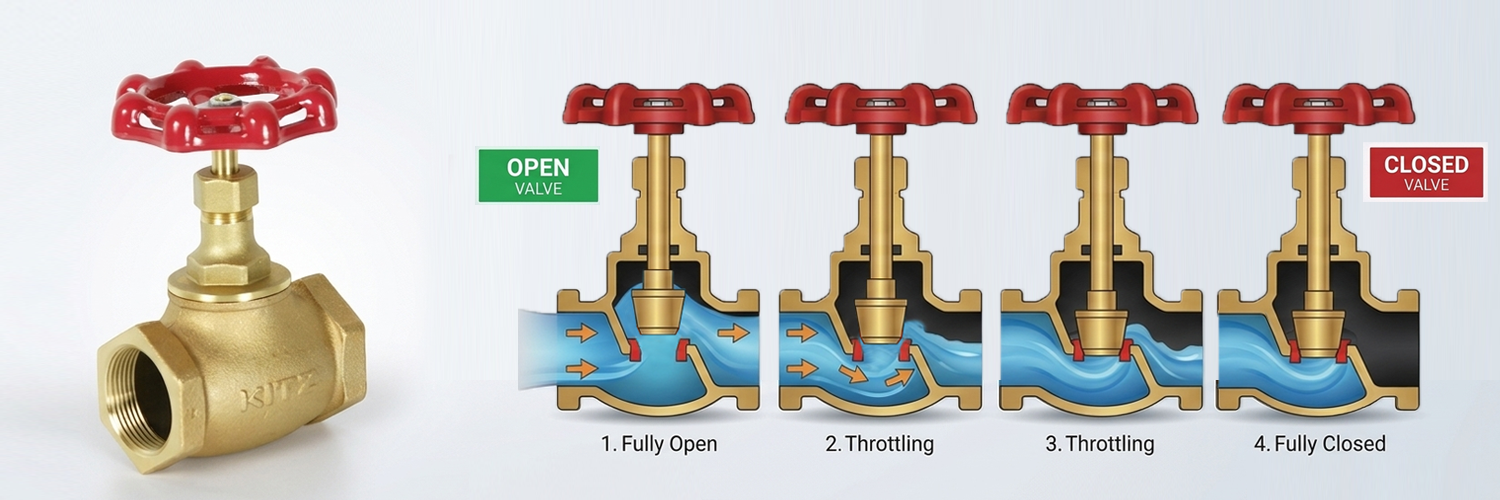
It is a type of valve that is suitable for use to control or adjust the flow
rate by partially opening the valve tongue to control and adjust the flow rate according to the required volume.
Advantages of Globe Valves
- Excellent flow rate regulation capabilities.
- Highly robust valve body structure.
- Suitable for high-pressure or high-temperature applications.
- Can be adapted for use as an automatic control valve (provided the valve plug is appropriately designed).
Precautions for Globe Valves
- They exhibit a high pressure drop across the valve.
- The valve seat is susceptible to damage from debris trapped between the valve disc and the seat during opening and closing operations.
- They are heavy, which may impact structural design.
- They are unsuitable for applications requiring high fluid purity or the absence of impurities, as residue tends to accumulate inside the valve body.
3. Check Valves
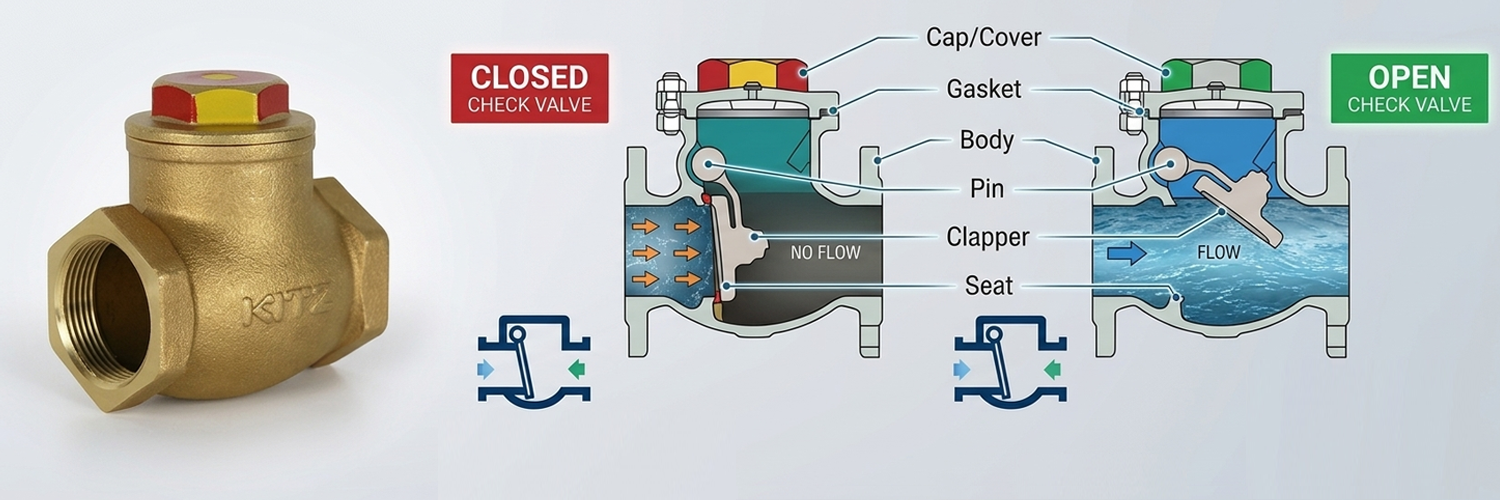
Swing Type
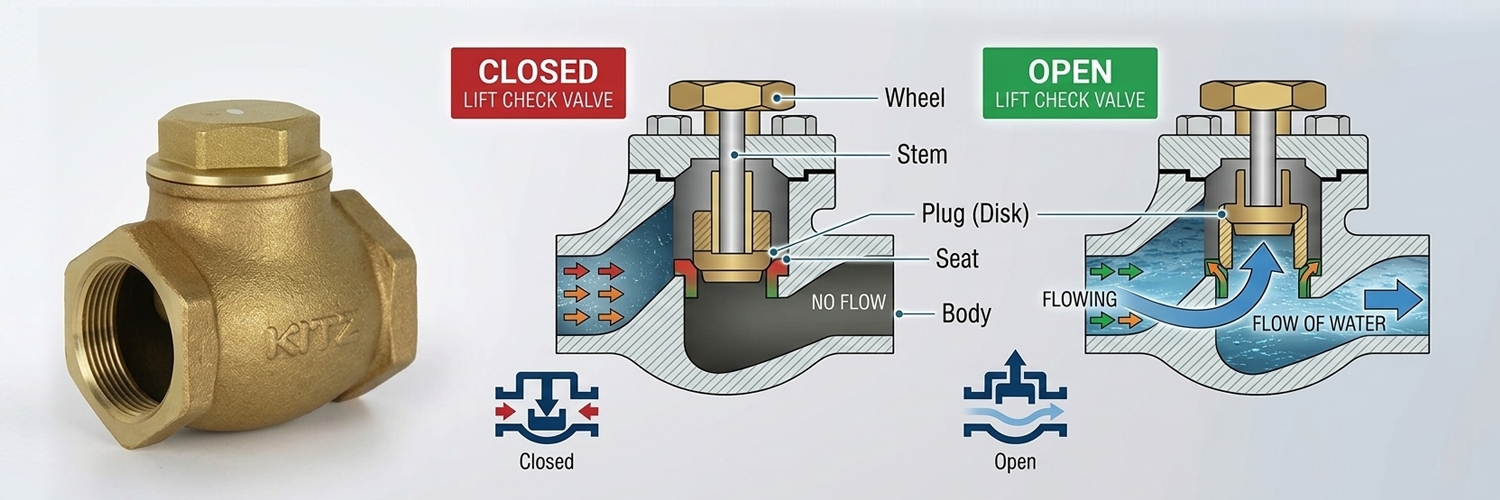
Lift Type
Wafer Type
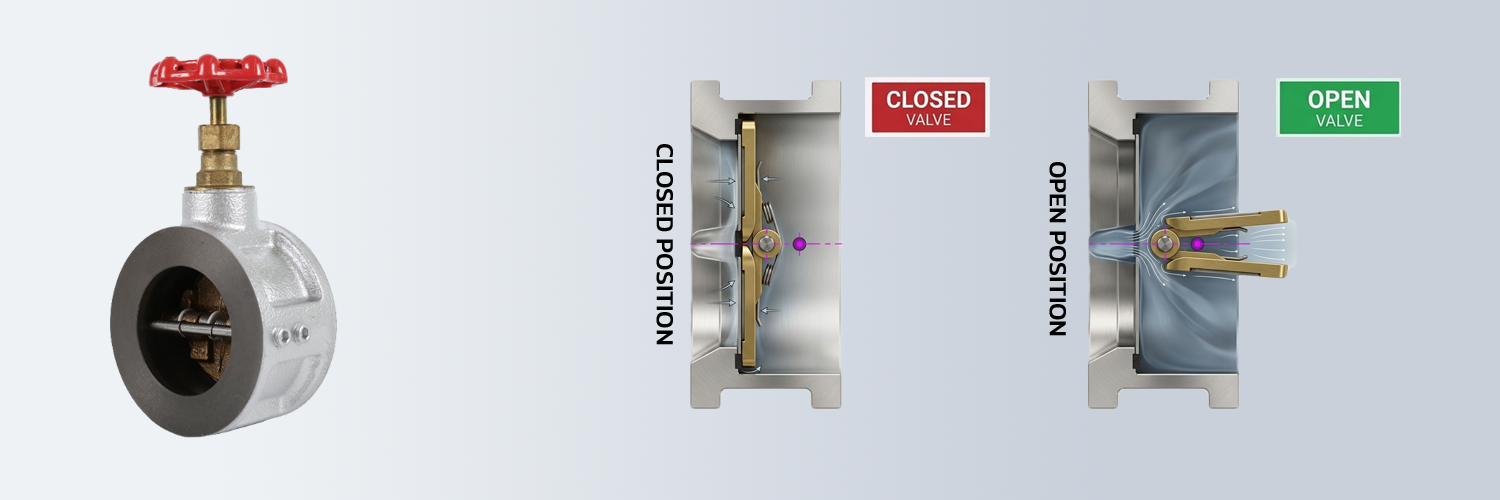
It is a type of valve that is suitable for use to prevent the backflow of fluid
. When there is fluid flowing back in the same direction.
Advantages of check valves
- Installed at the water pump outlet to prevent backflow into the pump when it stops operating.
- Low pressure drop across the valve.
- Can be installed in either horizontal or vertical positions (depending on the valve model).
- For swing-type valves, a loud noise may occur when the valve disc impacts the seat during closing, potentially causing damage to the seat.
- Leakage may occur if the fluid contains sediment or impurities.
4. Ball Valves
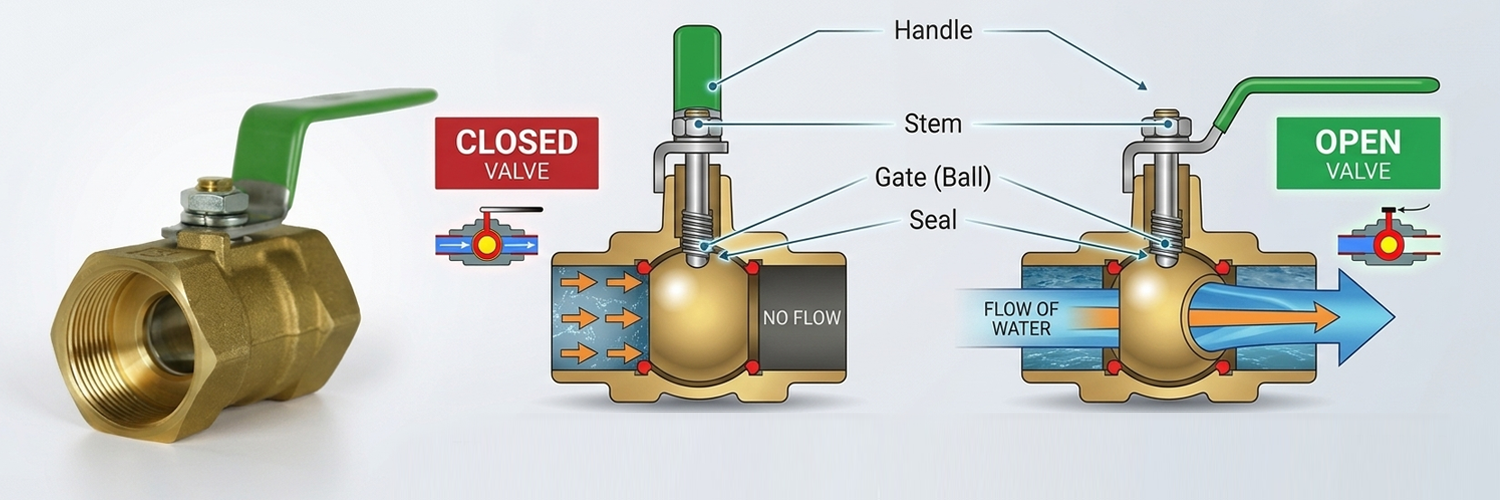
Advantages of ball valves
- Quick opening and closing; requires only a 90-degree turn of the valve stem.
- Suitable for applications requiring frequent operation.
- Low pressure drop across the valve.
- Capable of providing a tight, rapid shut-off of the fluid flow.
- Not suitable for extremely high-temperature applications.
- Use with fluids containing impurities may scratch or damage the seat and ball.
- Select the seat and ball materials to suit the operating temperature and pressure.
5. Butterfly Valves
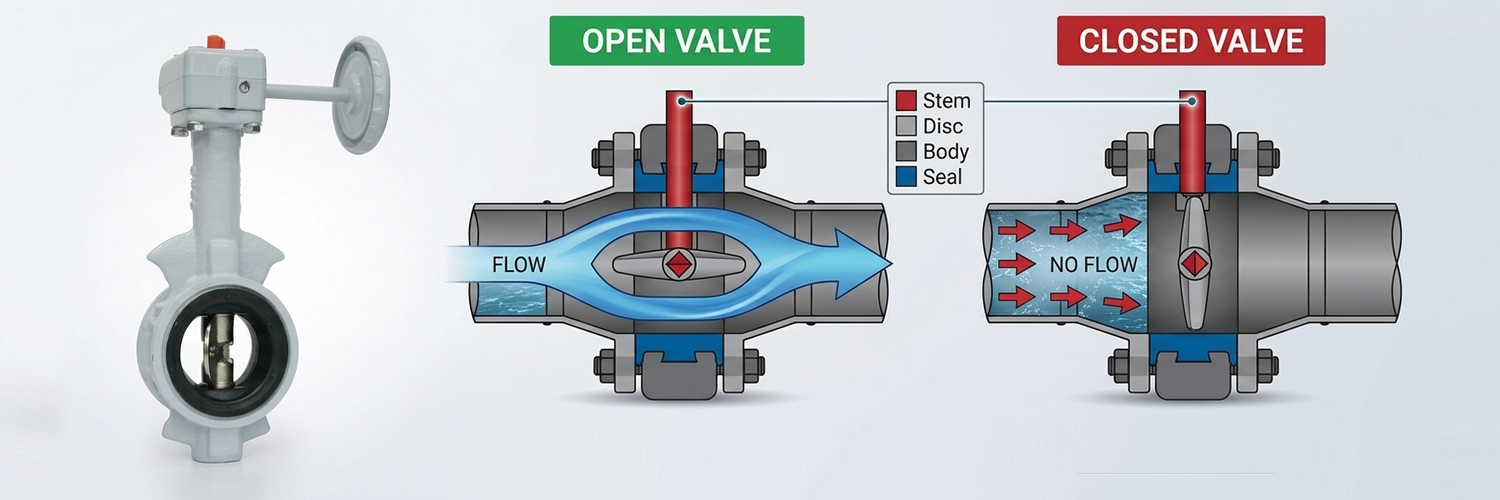
It is a type of valve that is suitable for use to control or adjust the flow
rate by partially opening the valve tongue to control and adjust the flow rate according to the required volume.
Advantages of butterfly valves
- Quick and convenient to open and close; allows for flow rate adjustment.
- Simple structure; features a slim, lightweight design.
- Requires less installation space compared to other types of valves.
- Easy to install and maintain.
- Not suitable for precise flow rate control.
- Not suitable for high-pressure applications.
- The valve seat is in constant contact with the fluid, making it susceptible to wear; such wear can lead to leakage.
- Opening and closing the valve requires significant force, so a gear mechanism may be needed to provide mechanical advantage.
6.สเตรนเนอร์ (Strainers)
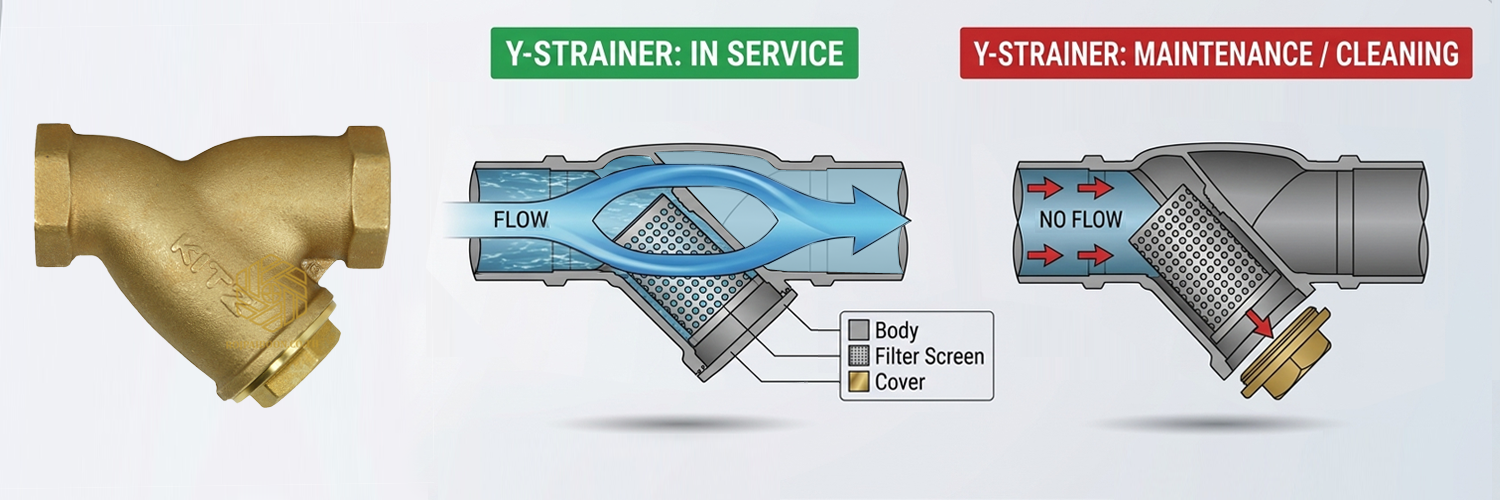
It is not a valve, but one of the important devices that serves to filter contaminants in the fluid system, such as sludge debris, to prevent sediment debris from escaping into the system, which could damage valves or other equipment.